
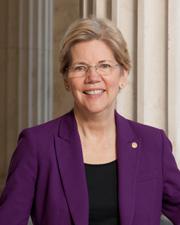
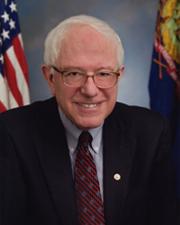
The scoring rules are locked, and the first official Senate standings have a race at the top tighter than any roll call this year. Elizabeth Warren has 703.6 points. Bernie Sanders has 703.1.
Both got there the same way. Neither has cast a single vote that cost them points with a funder: no sell-out votes, no sus votes. Both raise most of their money in gifts under $200. And both voted the way their voters wanted far more often than not: Warren 82 times against 12, Sanders 80 against 12.
Where the half point comes from
Sanders has the bigger clean-money bonus. Industry money is 0.7% of the $63.1 million he has raised, against 1.6% of Warren's $26.2 million, and that is worth 9 extra points to him.
Warren wins it back on one vote. On Nov. 19, 2025, the Senate voted on whether to take up a resolution undoing an EPA rule that gave oil and gas companies more time to meet emissions standards. Most Americans want limits on the greenhouse gases companies can emit, and Warren voted to take it up. Sanders didn't vote. The motion failed 46–51, and Warren's vote is worth 10 points.
Their other missed scored votes, one for Warren and two for Sanders, came on issues where they had already cast the three votes' worth any one issue can count, so those made no difference. If the season ends level, the published tie-break comes down to attendance on scored votes, where Warren also leads, 98.9% to 96.8%. The season ends Jan. 3, and the lame-duck Senate still has votes to take.
| # | Senator | With–against | Funder votes | Score |
|---|---|---|---|---|
| 1 | D Elizabeth Warren, Mass. | 82–12 | 0 | 704 |
| 2 | I Bernie Sanders, Vt. | 80–12 | 0 | 703 |
| 3 | D Jeff Merkley, Ore. | 75–11 | 0 | 641 |
| 4 | D Peter Welch, Vt. | 83–10 | 0 | 637 |
| 5 | D Chris Murphy, Conn. | 74–12 | 0 | 630 |
| 6 | D Elissa Slotkin, Mich. | 72–9 | −23 | 626 |
| 7 | D Angela Alsobrooks, Md. | 81–10 | −61 | 611 |
| 8 | D Mark Kelly, Ariz. | 70–10 | −29 | 596 |
| 9 | D Adam Schiff, Calif. | 75–11 | −60 | 579 |
| 10 | D Andy Kim, N.J. | 76–11 | −15 | 576 |
Two colors, two exceptions
Step back and the standings turn into a party line. Every spot from 1st to 46th belongs to the Democratic caucus. Every spot from 49th to 98th belongs to a Republican. Only two senators are out of order.
Part of the reason is the votes themselves. NDL scores 95 Senate roll calls. On 91 of them most Democrats voted one way and most Republicans the other, and national polls sided with the Democratic majority 73 times and with the Republican majority 18 times. Judging each senator by their own state's voters softens that, but doesn't erase it.
The bigger reason is money. The average Senate Democrat has 447 points from votes, the average Republican −117. That's a gap of about 560 points. But the gap on funder votes is more than twice as big: the average Republican has lost 1,383 points to votes that went an industry's way, the average Democrat 66. NDL rates 27 of the 51 Republican senators captured by industry money, and 7 of the 47 Democrats. Republicans have cast 492 sell-out votes; Democrats, 18.
| Senator | From votes | Funder votes | Bonus | Score |
|---|---|---|---|---|
 Rand Paul R · Kentucky · 47th | +180 | −178 | +68 | +70 |
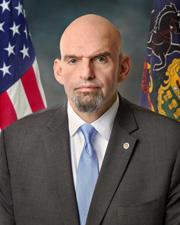 John Fetterman D · Pennsylvania · 48th | +250 | −287 | 0 | −37 |
 Susan Collins R · Maine · 73rd | +500 | −1,948 | 0 | −1,448 |
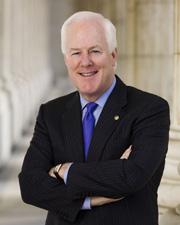 John Cornyn R · Texas · 98th | −225 | −2,898 | 0 | −3,123 |
| Average Senate Democrat | +447 | −66 | +99 | +481 |
| Average Senate Republican | −117 | −1,383 | +2 | −1,498 |
Exception one: Rand Paul, 47th
Paul has sided with his voters against most of his own party 25 times, the third most in the Senate. That includes Nov. 19, when he was one of three Republicans to vote for the Iran war-powers resolution, which failed 48–51. He keeps his funder losses small for a Republican: five sell-out votes, all for the oil industry, and seven sus votes. And with industry money at 8.2% of what he raises, he keeps part of his clean-money bonus.
Exception two: John Fetterman, 48th
Only three senators take a smaller share of their money from industry than Fetterman, at 3.5%. His problem is 16 sell-out votes, almost all of the Senate Democrats' 18. All 16 came on the same subject: resolutions to end or limit the U.S. war with Iran, plus one asking for a report on Israel's human-rights record. His state's voters wanted them passed, and he voted no each time.
A sell-out vote needs a funder on the other side. Here that funder is the pro-Israel lobby, which NDL records as wanting these resolutions to fail. We haven't found a public statement from the lobby on them, so that position is NDL's own judgment, and it's labelled that way on every vote. Each of the 16 costs him 16 points, and together they wipe out his clean-money bonus. In all they cost him about 470 points.
The case that tests the model: Susan Collins, 73rd
No senator has sided with their voters against their own party more than Collins: 35 times. Her 500 points from votes are tied with Jeanne Shaheen's for second in the Senate, behind only Alsobrooks. The next Republican, Lisa Murkowski, has 286.
Then the money. Industry money is 24.8% of what she raises, just under the line where NDL calls a member captured, and 15 sell-out votes and 24 sus votes have cost her 1,948 points. She's the clearest case in the Senate of what the score is built to show: voting with the public most of the time doesn't erase the votes that went the funders' way.
The bottom
All eight of the lowest-ranked senators are Republicans NDL rates captured. Last is John Cornyn of Texas at −3,123. He sided with his voters 22 times and against them 50. Industry money is 30.7% of the $50 million he has raised. Twelve sell-out votes, seven of them for the oil industry, and 40 sus votes have cost him 2,898 points. Twenty-two of those sus votes are on the Iran war, arms sales to Israel and the Israel human-rights resolution, where NDL records the pro-Israel lobby's position as its own judgment.
Three of the bottom eight won't be back: Cornyn and Bill Cassidy (91st) lost their primaries, and Thom Tillis (93rd) is retiring.
Not in yet: stock trades
NDL also takes points off for stock a member's household buys while in office. House members' filings are loaded and count. The Senate's are still being collected, so no senator has a trade penalty yet. When they land, these ranks will move, and we'll say so here.
How this was made
Written by NDL's editor from the Scoring v1 standings of Nov. 23, 2026. The rules are locked for the season; ranks still move as new votes and polls come in. Every number was checked against the database by script. AI helped draft the text.
Sources
- Votes: Voteview (UCLA), from the Senate. Each scored vote, with its poll, is on the senator's NDL page
- Voters' views: national polls with party breakdowns, combined with each state's 2024 presidential vote
- Money: FEC filings, 2023 to 2026, including leadership PACs, grouped by industry
- Primary results: House Press Gallery, Wikipedia, NPR, Sept. 2026
Corrections: none yet. See an error? Tell us.